Bushido
Bushido
I’ve been kicking around this idea for VIKINGS vs SAMURAI, right? Using Go as the backbone. This ancient Chinese game, over 2,500 years old, all about carving out territory and outthinking the other guy. I thought I had something there. But the story just wouldn’t click. Wouldn’t breathe.
Then I watch Kazuya Shiraishi’s Bushido (original title: Gobangiri).
And suddenly it’s like, what am I even doing?
Because this guy didn’t just use Go, he weaponized it. Turned it into emotion, into character, into the whole damn movie. Took the idea way further than I ever could. And not just further, but deeper. Cleaner. More elegant. The kind of storytelling that makes you realize you weren’t even playing the same game.
Kazuya Shiraishi’s Bushido gets something a lot of samurai movies only flirt with and never quite say out loud. Honor, when you chase it too far, stops being noble and starts looking a lot like self-destruction. This isn’t a movie about guys swinging swords and spraying blood. It’s a movie about choices. Calculations. Every move meaning something, every decision telling you who a person really is when nobody’s watching.
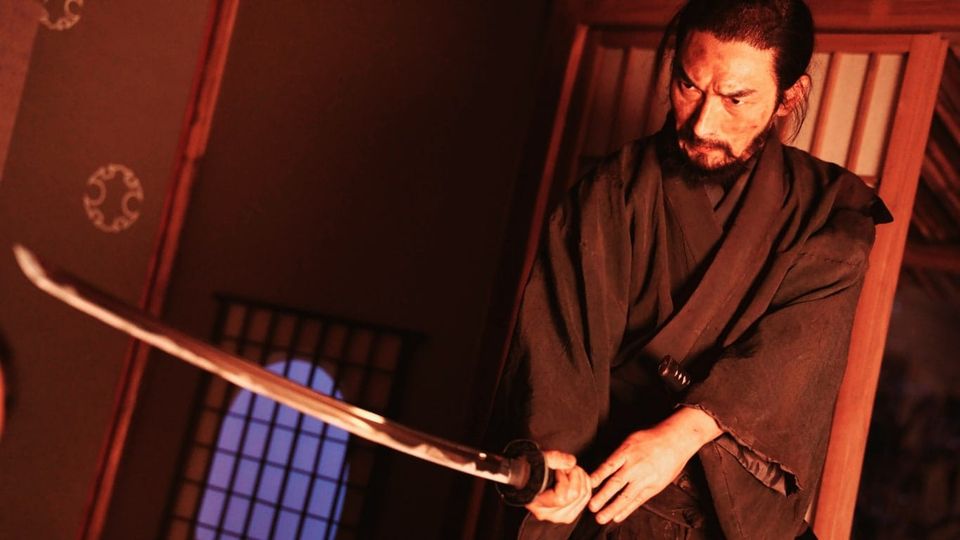
You’ve got Kakunoshin Yanagida, played by Tsuyoshi Kusanagi, and this guy is not your typical ronin. He’s broke. Living rough in Edo with his daughter Okinu, barely scraping by carving seals. Once upon a time he had status, respect, the whole deal. Then he gets hit with a false accusation and that’s it. Game over. What’s interesting is how he carries himself after that. He’s upright, controlled, almost too controlled. Like he’s holding himself together by sheer will. Kusanagi plays him like a man who swallowed Bushido whole and now it’s just sitting there inside him, hard as a stone. He’s not just stoic. He’s locked up. Preserved. Like one of those stamps he makes, perfect on the outside, maybe empty on the inside.
Shiraishi knows the samurai genre inside and out, but he’s not interested in doing the greatest hits. You’re not getting the big Kurosawa sweep or Okamoto’s explosive energy. This thing is quieter. Meaner in a subtle way. If you had to compare it, you’d land closer to Kobayashi, especially Harakiri, where the whole system gets put on trial. But even then, Shiraishi isn’t tearing it all down. He’s circling it. Watching it. Letting you sit with it. Bushido in this movie is both a guiding light and a trap, and the film never lets you settle on which one matters more.
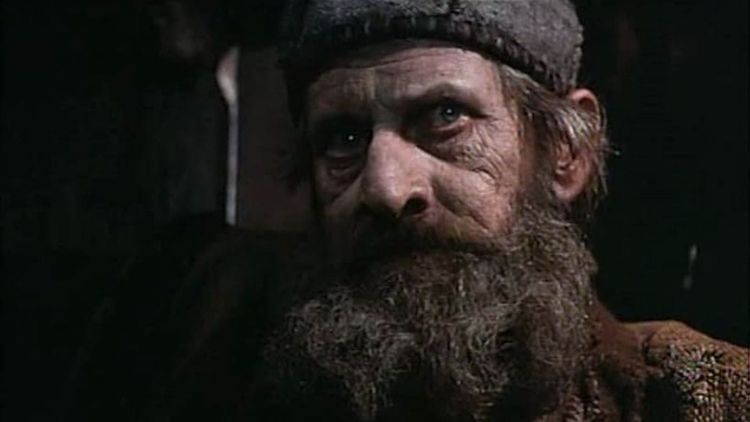
And then there’s the Go. That’s the secret weapon of the whole movie. You think it’s just background texture at first, some cultural detail. Nope. That’s the whole movie right there. Every match is a duel. Every stone is a decision. Kakunoshin goes up against Genbei Yorozuya, played by Jun Kunimura, who’s loud, flashy, a merchant who loves winning and loves showing you he’s winning. Total opposite energy. And when these two sit across from each other, it’s electric. No swords, no shouting, just hands placing stones and eyes locked in. The camera treats those moves like they matter, like they’re life and death, and honestly, they are.
The way they play tells you everything. Kakunoshin plays straight. Honest. Even when it costs him. Genbei plays to win, period. But here’s the twist. Being around Kakunoshin starts to change him. Slowly. You see it in how he plays, how he carries himself, how he does business. It’s like integrity is contagious. That’s a great idea. But Shiraishi doesn’t let it become a fairy tale. Because this world does not reward that kind of integrity. Not consistently. Not fairly.
Kakunoshin’s honesty doesn’t save him. It doesn’t protect him from getting dragged through the mud again. And it sure as hell doesn’t protect his daughter. Okinu, played by Kaya Kiyohara, is the emotional core of the whole thing. She’s quiet, observant, and way more aware than her father about what all this honor actually costs. There’s a moment where she steps up and offers to sacrifice herself to fix his situation, and the film doesn’t frame it as heroic. It feels inevitable. Like this is just how the system works. The burden falls on her. Not him.
That’s where the movie really cuts deep. Bushido isn’t just about the warrior. It’s about everyone around him who pays the price for his principles. Okinu gets that. Maybe better than he does.
Visually, the movie plays a tricky game. Early on, it leans a little too hard into these composed, almost painterly shots, like it’s trying to prove something. But once it settles in, it finds its groove. The world starts to feel lived in. Real. The lighting has this soft glow that makes everything feel like memory, like something already slipping away. And then you’ve got the Go scenes, which are staged like full-on battles. It’s wild how much tension Shiraishi pulls out of a wooden board and some black and white stones.
The pacing is slow, no question. Deliberate. You’re waiting for the violence, because it’s a samurai movie, right? But Shiraishi holds back. He builds everything through looks, conversations, small gestures. So when the violence finally shows up, it hits. It’s quick. It’s brutal. And it matters. It’s not there for spectacle. It’s the end result of everything that came before.
Now, the movie isn’t perfect. It pulls from a lot of different visual and tonal influences, and they don’t always line up clean. Sometimes it feels like it’s caught between being a classic throwback and something more modern and critical. That tension carries into the themes too. The film clearly shows how dangerous and rigid Bushido can be, but it also respects it. Maybe even admires it a little. So when Kakunoshin makes his final moves, driven by revenge, the film doesn’t fully condemn him. It feels inevitable. Like this is what the system produces.
And that’s really what Bushido leaves you with. No clean answers. No easy moral. Just this sense that the game was never fair to begin with. That playing by the rules might actually be the most dangerous thing you can do.
If you’re coming in expecting a blood-soaked samurai epic, this might throw you. It’s not that kind of movie. It’s quieter, more patient, and honestly, it sticks with you longer because of that. Shiraishi isn’t interested in giving you a rush. He’s interested in making you think about what all this honor really costs, and who ends up paying for it.