G.I. Samurai: Sonny Chiba Takes a Tank to Feudal Japan
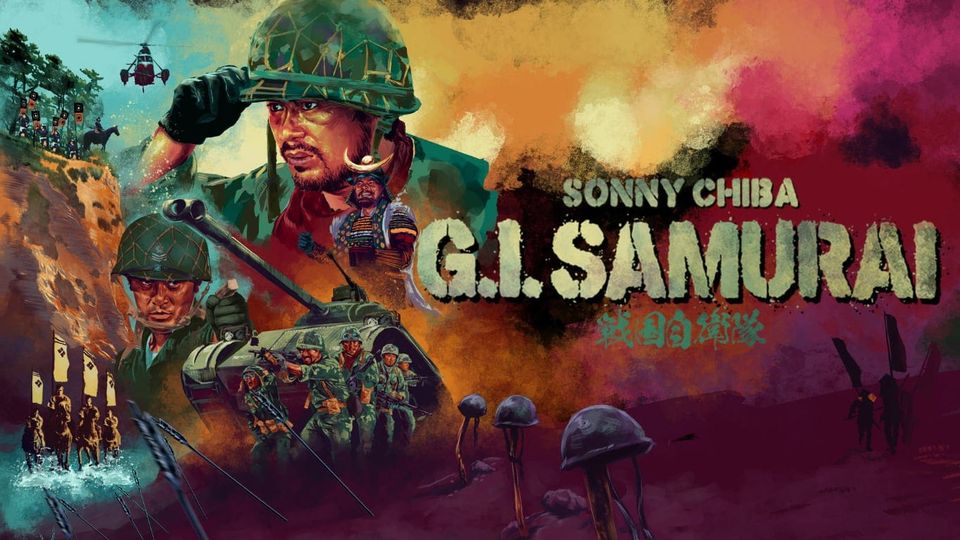
Sonny Chiba and a modern Japanese Self-Defense Force unit get sucked out of the 1970s and dumped straight into the blood-soaked chaos of the Sengoku period. And they don’t just arrive with a few rifles and a bad attitude. No, no, no. They bring the whole damn toy chest: tank, helicopter, jeep, armored personnel carrier, boat, machine guns, explosives—the full twentieth-century war machine dropped like a lit cigarette into sixteenth-century Japan.
That’s the movie. That’s the poster. That’s the reason you sit down.
Because once those soldiers hit the past, the film becomes this mad, glorious collision between modern firepower and feudal death-worship. Machine guns chew through archers. Helicopters buzz over armies that think they’re looking at some metal demon from the sky. Tanks roll toward mounted warriors who have absolutely no vocabulary for what’s coming at them, but charge anyway, because that’s what warriors do. And the samurai don’t just stand there waiting to be massacred. They adapt. They use the hills, the trees, the mud, the numbers, the banners, the traps, and that terrifying old-world willingness to die beautifully for a lord who probably won’t remember their names.
That’s where G.I. Samurai is at its best. Not as clean storytelling. Not as airtight science fiction. As an image machine. A fever dream. A kid’s impossible war-game scenario staged with enough bodies, horses, smoke, steel, and roaring engines to make the whole thing feel stupid and magnificent at the same time.
As science fiction? Forget it. The movie barely cares. The time slip happens, everyone looks around, and the script basically says, “Yeah, don’t worry about it.” Nobody sits down with a chalkboard to explain paradoxes or timelines or butterfly effects. One guy mentions, hey, maybe we could kill our own ancestors, which is a hell of an idea, and the movie just blows right past it like a tank through a rice-paper door. The time travel isn’t the point. It’s the excuse.
What the movie actually wants to talk about is power.
At first, Chiba’s Lieutenant Iba seems like a man trying to keep his people alive and maybe get home. Reasonable. Military. Command voice. But slowly, something curdles. He starts realizing these weapons don’t just make him dangerous. They make him historical. He can bend the past. He can pick winners. He can carve his name into a century that was never supposed to know him.
And that’s when the movie gets mean.
Because once these modern men are cut loose from the world that trained them, promoted them, punished them, and gave them rules, some of them become exactly what men with weapons have always become when nobody can stop them. Conquerors. Thieves. Rapists. Murderers. Opportunists. Lost boys. Dead men walking around before the blade finds them. The movie’s view of technology is ice cold: a machine gun does not make war civilized. It just lets you kill peasants faster.
The problem is, G.I. Samurai is also a mess. A big, sweaty, overpacked, overexcited mess. It has enough plot for a miniseries and tries to shove it all into one movie. Soldiers go rogue. Soldiers fall in love. Soldiers remember girlfriends back home. Soldiers befriend villagers. Soldiers wander off. Alliances form. Alliances rot. Feudal politics drift in and out. A boat gets its own little nightmare subplot. Characters appear, do one memorable or horrible thing, and vanish into the smoke.
I will not let history destroy me.
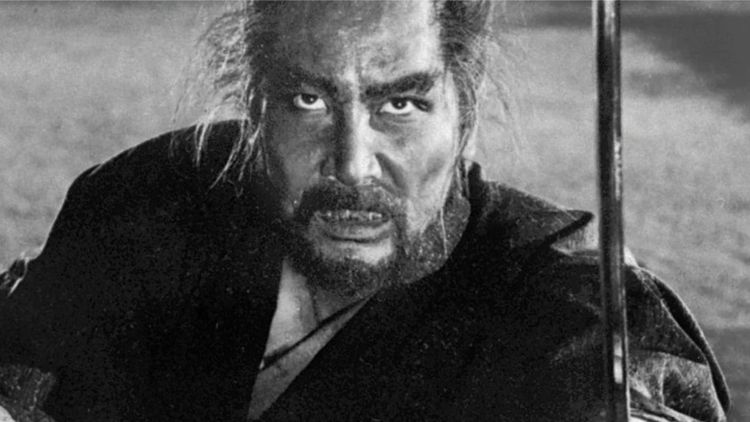
Iba is the center of it, but even he can be slippery. His turn from survival-minded commander to would-be warlord gives the movie its spine, but the psychology isn’t always there. You feel the idea more than the man. Sonny Chiba, being Sonny Chiba, still carries it through sheer presence. He has that thing where he looks like he could win a fight, lose a war, and still judge you for how you held your sword. But the movie weirdly doesn’t let him unleash the full Chiba until late in the game. When he finally gets into close combat, you can feel the film wake up and say, “Oh right, we have Sonny Chiba.”
The supporting cast is tougher. A lot of the soldiers blur together because they’re all dressed alike and the movie keeps trying to give everyone five minutes of humanity instead of giving a few people twenty. Yano, the rogue bastard, stands out because he’s so plainly rotten. Kagetora, the feudal ally, is memorable too, though his performance starts broad enough to knock over furniture before settling into something more interesting once guilt, ambition, and political necessity start pressing down on him.
The tone? Wildly unstable. This thing swerves from brutal assault to battlefield carnage to pop-song weirdness to antiwar tragedy to pulpy adventure to historical epic like the driver’s been shot and refuses to take his foot off the gas. Sometimes the music works. Sometimes it feels like the wrong record is playing in the wrong bar during the wrong murder. But even that becomes part of the film’s cracked personality. G.I. Samurai wants to be everything: war movie, samurai movie, science-fiction movie, Sonny Chiba showcase, antiwar parable, exploitation picture, prestige epic, and midnight-movie hallucination.
For Japanese audiences, the Sengoku history gives the movie an extra charge. For foreign viewers, especially anyone stuck with one of the butchered export cuts, the politics can feel like being dropped into the third act of a historical epic where everybody else already read the book. Names like Takeda Shingen and Nagao Kagetora carry weight, but the film doesn’t always stop to explain why. It assumes you either know or you’ll catch up while the bodies hit the ground.
But man, the production value. That’s where the movie earns its legend, the restoration brings back all it’s glory! The armor, the vehicles, the locations, the horses, the extras, the smoke, the scale—it all gives the film a brute-force grandeur. The central visual contrast never gets old: modern soldiers in fatigues standing beside samurai in armor, diesel engines growling against fluttering war banners, rifles pointed at men who still believe history belongs to the sword.
That image is why G.I. Samurai survives.
The movie belongs to a whole oddball family of samurai time-displacement stories, from frozen warriors in modern cities to turtles in feudal Japan to animated ronin flung into the future. It came from Ryō Hanmura’s novel, later got remade as Samurai Commando: Mission 1549, and eventually became a TV miniseries, which, honestly, may be the shape this story wanted all along. It has too many people, too many betrayals, too many little human disasters for one movie to hold cleanly.
So no, G.I. Samurai is not elegant. It is not disciplined. It is not always coherent. It is too long, too crowded, too tonally drunk on its own possibilities.
But it is unforgettable.
Because when it works, it really works. It takes a premise that sounds like something scrawled on a napkin after three beers, “What if Sonny Chiba took a tank into feudal Japan?”, and turns it into something bigger and nastier: a movie about men discovering that history is not sacred when you have enough ammunition, and that the dream of rewriting the world usually ends with mud, fire, screaming horses, and a sword coming for your throat.